
Livid pinkgill (Entoloma sinuatum): How to Recognise It
Quick answer
Livid pinkgill, Entoloma sinuatum: gastrointestinal irritant, serious poisoning. Cap, gills, stem and habitat to check, what it is confused with, and what to do after a suspected ingestion. Not a guide to eating.
Updated 2026-09-10 · Sources: Wikipedia
Take a photo to learn what it might be. Never eat a wild mushroom based on an app or a website.
Download on the App StoreWhat are the key facts?
- Scientific name: Entoloma sinuatum
- Common names: livid pinkgill
- Toxin: gastrointestinal irritant (unidentified alkaloid compounds)
- Severity: serious poisoning
- First symptoms: Diarrhea, vomiting, and headache appear 30 minutes to 2 hours after ingestion.
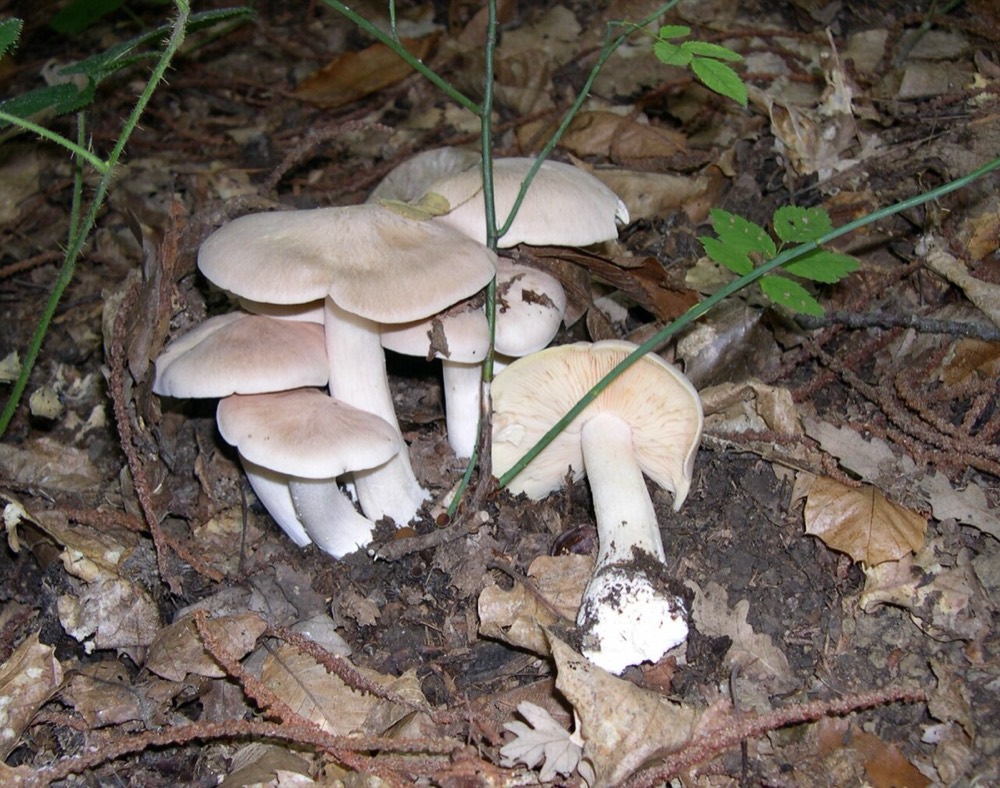
- Cap: Ivory to light grayish-brown, up to 20 cm across, with a wavy, inrolled margin.
- Gills: Sinuate to nearly free gills, pale yellowish-white when young, turning pink and then reddish as the spores mature.
- Stem, ring and volva: Stem stout, white, no ring.
- Spore print: Pink (with reddish-brown tones).
- Where and when it grows: Deciduous woodlands (oak, beech, birch) on clay or chalky soils; late summer to autumn; can form fairy rings.
- Range in North America: Widely distributed in North America, ranging south to Arizona.
How to recognise Livid pinkgill
- Cap: Ivory to light grayish-brown, up to 20 cm across, with a wavy, inrolled margin.
- Gills: Sinuate to nearly free gills, pale yellowish-white when young, turning pink and then reddish as the spores mature.
- Stem, ring and volva: Stem stout, white, no ring.
- Spore print: Pink (with reddish-brown tones).
- Where and when it grows: Deciduous woodlands (oak, beech, birch) on clay or chalky soils; late summer to autumn; can form fairy rings.
- Range in North America: Widely distributed in North America, ranging south to Arizona.
Easily confused with
- St. George's mushroom, Calocybe gambosa: St. George's mushroom has crowded, cream-colored gills.
- the miller, Clitopilus prunulus: The miller has white, decurrent gills that turn pink as they mature.
- field mushroom, Agaricus campestris: The field mushroom has a ring on the stem, and its gills turn chocolate-brown at maturity.
What happens if it is eaten
Toxin: gastrointestinal irritant (unidentified alkaloid compounds). Severity: serious poisoning. Timing: Diarrhea, vomiting, and headache appear 30 minutes to 2 hours after ingestion. A delayed start is the dangerous part: hours without symptoms do not mean the mushroom was harmless.
What to do if someone may have eaten it
Call Poison Control at 1-800-222-1222 (U.S.) right away, or your local emergency number. Keep any leftover mushroom, a photo of it, and note when it was eaten. Do not wait for symptoms and do not try home remedies. This page does not give medical advice.
What a photo can and cannot do
A clear photo of the whole mushroom, including the base dug out of the ground, the gills and a spore print, lets the app and a mycologist narrow down what it might be and flag features that match Livid pinkgill. No photo, app or website can confirm that a wild mushroom is safe to eat. Use identification to know what to avoid, not what to cook.
FAQ
Is livid pinkgill deadly?
Livid pinkgill is classed here as: serious poisoning. Its toxin is gastrointestinal irritant (unidentified alkaloid compounds). Treat any suspected ingestion as an emergency.
Where does livid pinkgill grow?
Deciduous woodlands (oak, beech, birch) on clay or chalky soils; late summer to autumn; can form fairy rings.
Can the app tell me if a mushroom is safe to eat?
No. The app helps you see which features match known species, including toxic ones, so you know what to stay away from. It never declares a wild mushroom safe.
More in Toxic Mushrooms of North America
- Chlorophyllum molybdites Mushroom: Green-Spored Parasol ID
- Fly agaric (Amanita muscaria): How to Recognise It
- Panther cap (Amanita pantherina): How to Recognise It
- Eastern jack-o'-lantern mushroom (Omphalotus illudens): How to Recognise It
- Ivory funnel (Clitocybe dealbata): How to Recognise It
- Ink Cap Mushroom Poisonous? Common Ink Cap and Alcohol
Related
Learn what's growing around you.
Start with a single scan.
Take a photo to learn what it might be. Never eat a wild mushroom based on an app or a website.
Sources
- Wikipediaen.wikipedia.org/wiki/Entoloma_sinuatum
Compiled by the MushroomLens editorial team
Every fact on this page is taken from the sources listed above; numbers and prices are copied from the source, and prices name the guide or auction and its date. Research and drafting were assisted by AI, and each claim was then checked against the cited sources. Checked 2026-09-10. We do not buy, sell or grade items; the app identifies what you photograph and points you to these references.